03 / Helion Lux / Camera department

Helion Lux

The world is computed. The image is photographed.

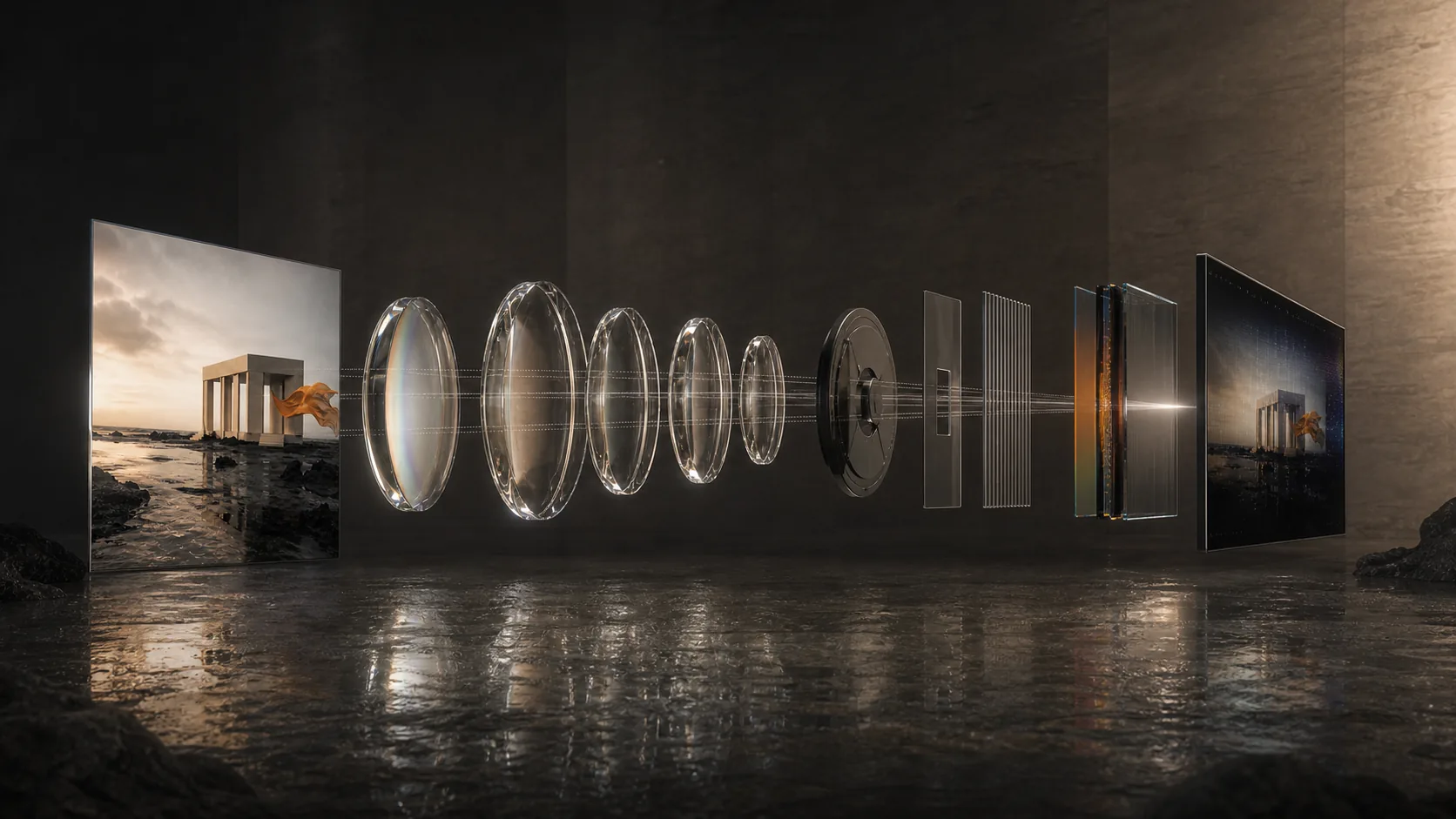
Lux is a cinema-grade path tracer with a physically simulated camera: virtual lenses, aperture, shutter, and sensor turning staged radiance into a digital negative.

Receives / Staged USD and radianceDelivers / Layered ACEScg EXR
Concept visualization of the coastal scene passing through physically plausible lens elements, aperture, shutter, and sensor into a luminous digital negative.Concept visualization / future camera study

The camera

A camera, not an export.

Lux does not merely shade geometry. It transports light through the scene and then through an optical system, allowing image character to arise from the same choices cinematographers already understand.

Lens construction, aperture, focus, shutter, motion, sensor response, depth, atmosphere, and material behavior remain physical parts of the photograph—not effects added after the fact.

One camera / any operator

Camera choices remain photographic choices.

A cinematographer, an LLM orchestrator, or future Numen works with the same scene, lens, sensor, focus, aperture, shutter, and exposure contract. The controls are computational; the decisions stay legible as cinematography.

  1. 01 / StageScene radianceUSD world and take
  2. 02 / FramePoint of viewPosition, lens, focus
  3. 03 / TransportPath traceLight, material, volume
  4. 04 / ExposeCamera chainAperture, shutter, sensor
  5. 05 / RecordDigital negativeACEScg beauty and evidence
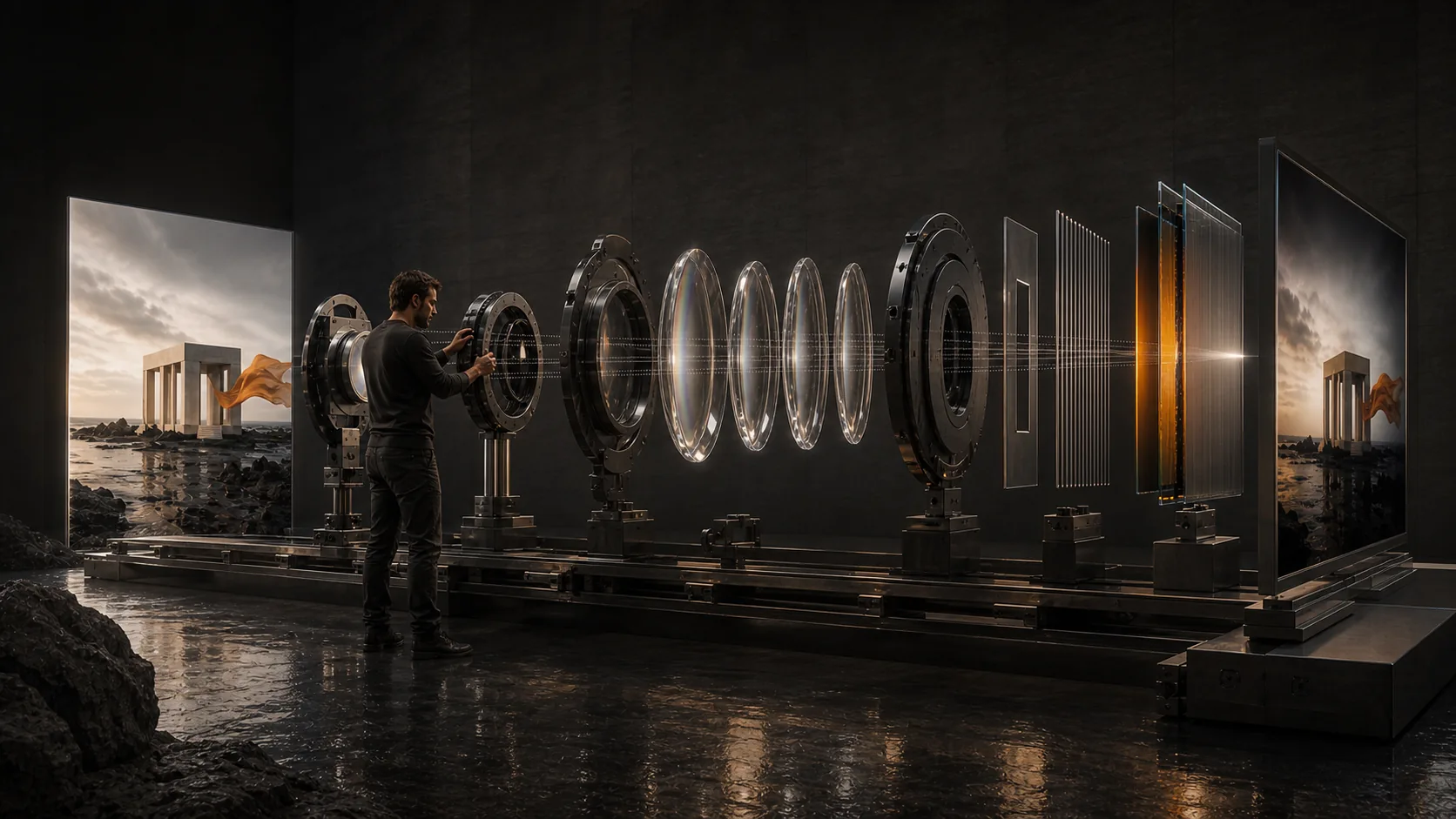
Concept study of a cinematographer adjusting a physical optical chain between the staged coastal pavilion and its photographed image.Concept visualization / camera craft study

01 / The camera

Optics become production objects.

Lens groups, focus, iris, shutter, sensor profile, and exposure are modeled as a coherent camera chain. A filmmaker can choose them directly; orchestration can make the same choices at scale without inventing a second language.

World
OpenUSD scene and camera state
Capture
Lens · t-stop · shutter · sensor
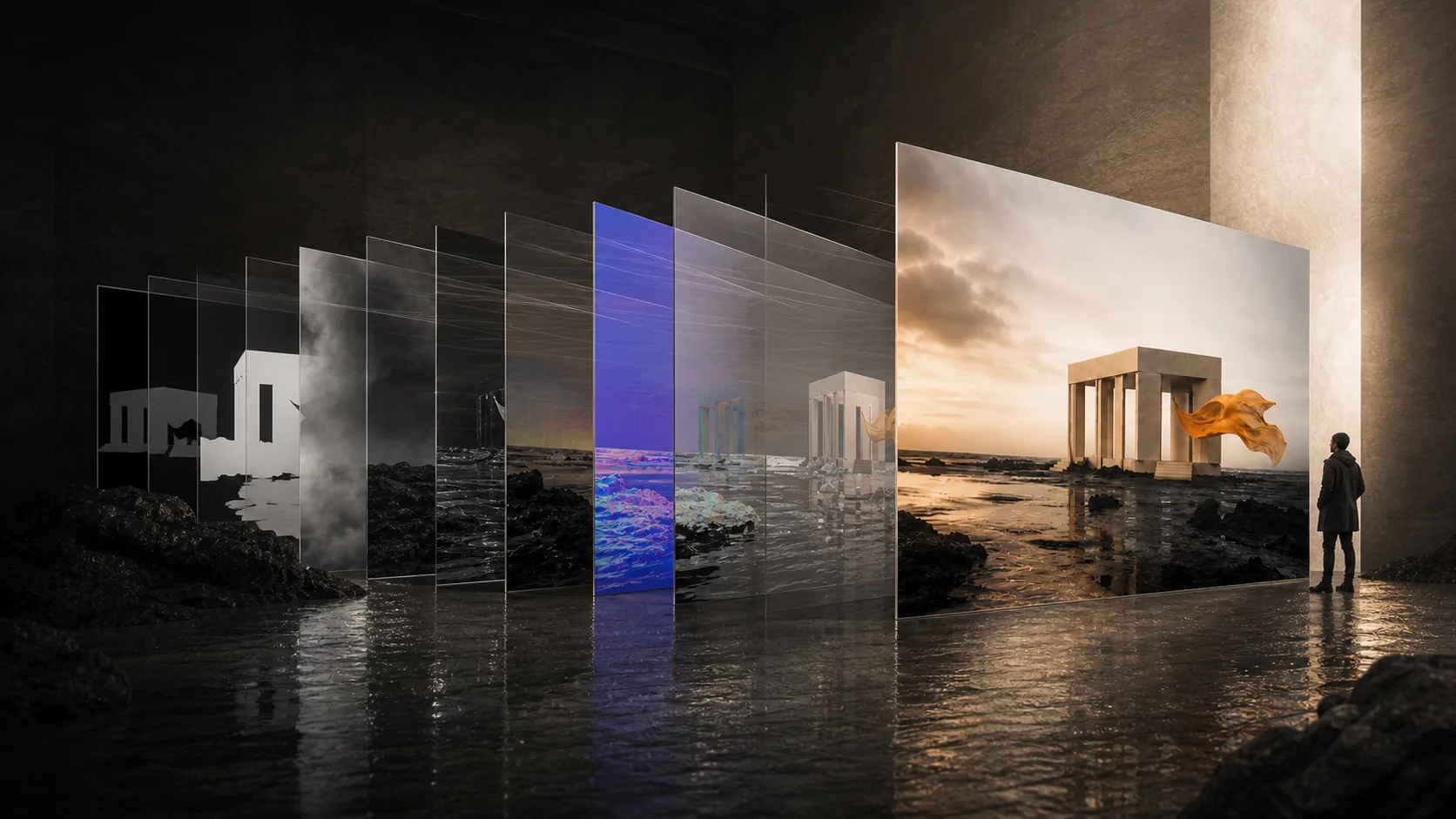
Concept study of a finished pavilion exposure surrounded by translucent depth, volume, material, matte, motion, and surface-evidence layers.Concept visualization / digital negative study

02 / The negative

The image keeps its evidence.

Lux records a linear ACEScg beauty image with the depth, motion, Cryptomatte, material, volume, and lighting evidence that downstream artists need. The negative is finished enough to judge and open enough to finish.

Image
ACEScg OpenEXR
Evidence
Up to 77 production channels

Physical control without physical film

Lux treats the virtual lens and sensor as real camera-department choices. A human can frame, expose, compare, and approve the image even when every photon and every production channel is computed.

Imaging architecture

From scene radiance to digital negative.

  1. 01 / SceneStaged USD

    Geometry, materials, animation, volumes, lights, and camera state define the photographed event.

  2. 02 / TransportPath tracing

    OptiX resolves global illumination, MIS, material response, hair, subsurface, motion, and media.

  3. 03 / OpticsLens + exposure

    Focal length, focus, aperture, shutter, depth of field, and optical behavior shape the image.

  4. 04 / CaptureSensor response

    The physically simulated camera converts arriving radiance into a calibrated digital negative.

  5. 05 / RecordACEScg EXR

    Beauty, depth, motion, masks, Cryptomatte, and production AOVs remain available downstream.

Imaging contractsOpenUSD in · OptiX transport · ACEScg OpenEXR out · up to 77 AOV channels

The exposure

Frame. Expose. Record.

01 / Frame

Choose the point of view.

Camera position, focal length, focus, depth of field, and movement become directorial decisions in the staged world.

02 / Expose

Let light do the work.

Global illumination, material response, volumes, motion blur, spectral behavior, and optical character resolve together.

03 / Record

Preserve the negative.

Linear ACEScg images and rich scene layers retain the latitude and evidence needed downstream.

Scene / Staged radiance
Optics / Lens and exposure
Negative / Image and evidence

The handoff

The image leaves camera raw.

Lux receives

The staged world and a photographic decision.

Core supplies the take. The cinematographic choice determines how its radiance becomes an image.

Lux delivers

A layered digital negative.

Gate receives ACEScg EXR frames, depth, masks, motion, Cryptomatte layers, and the camera evidence required to finish the shot.

Next department / 04

Resolve it in Gate.